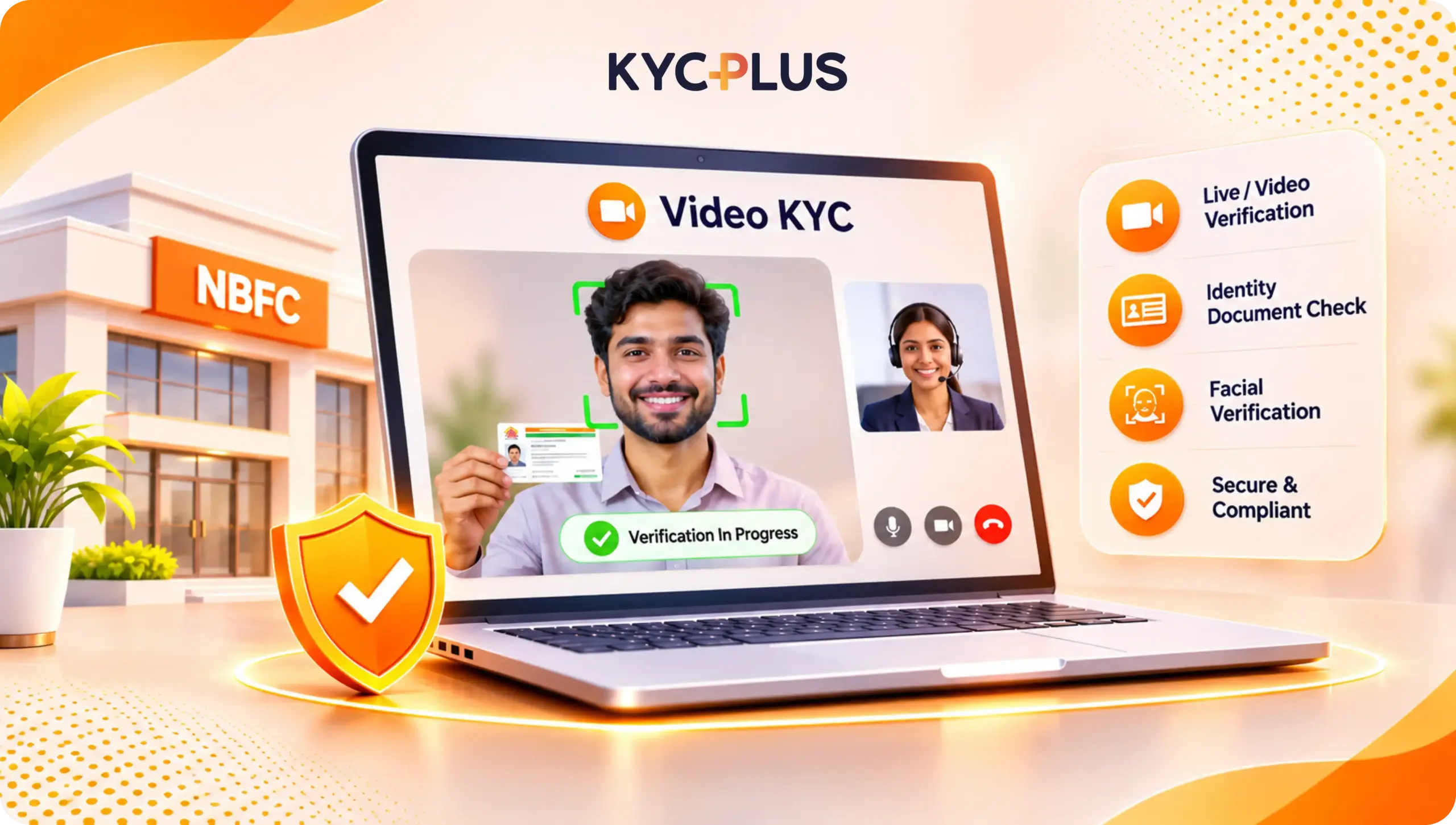
The financial services industry in India is rapidly moving towards digital customer onboarding. Customers today expect to apply for loans, complete identity verification and access financial services without visiting a physical branch or meeting an employee in person. For Non-Banking Financial Companies (NBFCs), this shift has created a need for faster, more accessible and technology-driven customer verification processes. Traditional Know Your Customer (KYC) procedures often involve collecting physical documents, manually checking identity details, coordinating with customers and managing verification records. These processes can increase onboarding time, operational workload and the possibility of errors, particularly for NBFCs handling large volumes of loan applications. A Video KYC Solution for NBFCs enables financial institutions to verify customers remotely through a video-based interaction, subject to applicable regulatory requirements and the institution’s approved process. It can help reduce dependency on physical customer visits, simplify identity verification and improve the overall digital lending experience.
As digital lending continues to grow, Video KYC is becoming an important component of modern customer onboarding infrastructure for NBFCs.
In this guide, we will explore what Video KYC is, how it works, its benefits, key features, implementation considerations and how NBFCs can streamline their customer verification processes using video-based KYC technology.
A Video KYC Solution for NBFCs is a digital technology platform that enables financial institutions to verify the identity of customers through a live or otherwise regulatorily permitted video-based verification process, depending on the applicable framework.
Instead of requiring customers to visit a branch or submit documents through a purely manual process, Video KYC can allow customers to complete identity verification remotely using a smartphone, laptop or another compatible device.
During the verification process, customers may be required to:
A Video KYC Solution for NBFCs can be integrated into digital loan application workflows, customer onboarding systems and other financial services platforms to make verification more accessible and efficient.
The objective is not simply to conduct a video call. It is to establish a structured, secure and auditable customer verification process.
For NBFCs offering personal loans, business loans, vehicle loans, consumer finance, digital lending or other financial products, video-based KYC may help support remote customer onboarding where applicable.
NBFCs operate in a highly competitive financial services environment. Customers frequently compare loan providers based on processing speed, documentation requirements, accessibility and the overall application experience.
A lengthy onboarding process can result in incomplete applications, delayed disbursement and lost business opportunities.
Traditional KYC processes may require customers to:
These steps can become challenging when an NBFC operates across multiple locations or serves customers in remote areas.
A Video KYC Solution for NBFCs helps address several of these challenges by introducing a remote verification channel.
Digital lending has changed customer expectations. Customers increasingly expect to complete loan applications online and receive updates without unnecessary physical interactions.
Video KYC can support digital lending workflows by allowing identity verification to take place remotely, helping NBFCs make their onboarding journeys more convenient.
Every additional step in a loan application can create friction.
If customers are required to travel, submit documents repeatedly or wait for manual verification, they may abandon the application.
A Video KYC Solution for NBFCs can reduce some of these barriers by enabling customers to complete verification remotely, subject to the NBFC’s onboarding process and regulatory requirements.
NBFCs may serve customers across cities, smaller towns and geographically dispersed locations.
Remote verification can help NBFCs reach customers who may not have easy access to branches, physical offices or verification personnel.
Manual verification processes require coordination between customers, employees and internal teams.
Video-based verification workflows can help organize customer interactions, verification records, workflow statuses and supporting documentation within a digital environment.
Digital transformation involves more than digitizing application forms.
NBFCs need connected processes for customer acquisition, KYC, loan application processing, document management, decision-making, loan disbursement and servicing.
A Video KYC Solution for NBFCs can become part of this larger digital lending ecosystem.
The Video KYC process generally begins when a customer submits a loan application or starts the onboarding process through an NBFC’s digital platform.
Depending on the institution’s regulatory framework, workflow and technology configuration, the verification process may involve several steps.
The exact workflow may vary depending on the NBFC, the verification model, the applicable RBI requirements and the implementation.
The customer begins by registering on the NBFC’s website, mobile application or digital lending platform.
During registration, the customer may provide information such as:
The system may initiate the KYC workflow after the customer completes the required application steps.
Before starting the verification process, the customer may need to provide the consent required for identity verification, recording, processing of personal information and other applicable activities.
A Video KYC Solution for NBFCs should support a clear and structured verification journey that communicates the steps customers need to follow.
The verification workflow may include:
In applicable Video KYC workflows, the customer may participate in a live video interaction with an authorized official.
During this interaction, the verification process may include:
A Video KYC Solution for NBFCs can help manage the video session and related workflow activities.
Customers may be required to present or provide identity documents during the verification process.
The platform may support document-related activities such as:
Where supported, OCR technology may assist in extracting relevant information from documents, reducing repetitive manual data entry.
OCR alone, however, does not establish the authenticity of a document or independently complete identity verification.
Depending on the system configuration and verification requirements, facial verification or liveness-related checks may form part of the customer verification process.
These technologies may help assess whether the person participating in the verification process corresponds with the required identity information and whether additional checks are needed.
Such checks must be implemented and interpreted within the institution’s approved verification procedures.
After the video interaction and relevant verification activities are completed, the NBFC may review the verification outcome.
The verification status may include workflow states such as:
The NBFC’s authorized personnel and processes determine the appropriate outcome based on applicable requirements.
Customer verification records may need to be maintained in accordance with applicable requirements and the institution’s policies.
A Video KYC Solution for NBFCs can support digital record management, verification logs, workflow information and documentation management where these capabilities are available.
These records can help the NBFC review completed verification activities and support internal monitoring or audits.
When evaluating a Video KYC Solution for NBFCs, financial institutions should look beyond the availability of video calling. The platform should support the complete verification workflow, operational requirements, customer experience and integration needs.
Video verification should be organized through a structured workflow rather than an informal video call.
A platform may support:
A structured verification workflow can help NBFCs organize customer verification activities.
Document capture capabilities allow customers or verification personnel to provide required documents digitally.
The system may support:
Efficient document capture can reduce the challenges associated with collecting and managing physical documents.
OCR technology can help extract information from identity documents and other customer records.
For example, OCR may help capture:
A Video KYC Solution for NBFCs that supports document processing can help reduce manual data entry and make customer information available in a structured format for subsequent workflow activities.
However, OCR-generated data should be validated appropriately, especially where accuracy is important for identity verification.
Facial matching technology can compare facial information obtained from different sources, subject to the platform’s capabilities and the institution’s verification requirements.
For example, facial comparison may be used as part of a workflow involving a customer’s photograph or an identity document.
Financial institutions should evaluate the accuracy, security, testing and operational suitability of these capabilities before implementation.
Liveness detection technologies may help assess whether a biometric interaction is associated with a live person rather than certain presentation or spoofing attempts.
NBFCs should assess the technology’s capabilities, limitations and appropriate use within their verification workflows.
Liveness detection should not be treated as a standalone guarantee against fraud.
For NBFCs handling multiple loan applications, managing video verification sessions can become operationally challenging.
Session management features may include:
These capabilities may help teams coordinate verification activities more efficiently.
Customer documents collected during onboarding may need to be stored, organized and retrieved efficiently.
Centralized document management can help NBFCs maintain relevant records within a structured digital environment.
Depending on the system, document management may include:
Auditability is an important consideration for financial institutions.
A Video KYC Solution for NBFCs should be evaluated for its ability to maintain relevant activity information, verification statuses and records.
Audit-related capabilities may include:
The exact records maintained should align with the applicable regulatory requirements and the NBFC’s internal policies.
Video KYC should ideally fit into the NBFC’s existing digital onboarding infrastructure.
Integration may involve:
Integration can reduce duplicate data entry and support a more connected onboarding journey.
Depending on the NBFC’s architecture, the KYC platform may need to connect with existing operational systems.
Integration may be achieved through APIs, middleware or other technical approaches.
A Video KYC Solution for NBFCs should be evaluated for its integration capabilities, security standards, technical documentation and flexibility to support the institution’s architecture.
Video-based verification can offer operational and customer-experience benefits when implemented appropriately.
Traditional KYC processes can involve multiple activities, including physical document collection, manual verification and coordination between employees.
Video digital KYC in India can help customers complete verification remotely, potentially reducing the time and effort required for onboarding.
A Video KYC Solution for NBFCs can help bring verification activities into a digital workflow, allowing institutions to manage verification more efficiently.
Faster verification can improve the onboarding experience when the broader loan application process is also well designed.
One of the most significant advantages of remote verification is accessibility.
Customers may be able to complete verification without travelling to a branch or office, where the applicable verification framework permits it.
This can be particularly useful for:
Customers expect financial services to be convenient.
A streamlined onboarding process can help customers complete verification without unnecessary delays or repeated interactions.
A Video KYC Solution for NBFCs can support a customer experience that is:
Customer experience also depends on application design, network quality, staff availability, document requirements and the overall onboarding process.
Video-based verification can help reduce some administrative tasks associated with physical KYC processes.
Digital workflow management may help teams:
These improvements can help operational teams manage their workload more effectively.
Video KYC can form an important part of a digital loan application journey.
Customers may complete application submission, document collection and verification through digital channels, depending on the NBFC’s workflow.
This may help NBFCs improve the consistency of their digital onboarding experience.
Traditional verification processes can involve expenses associated with physical document handling, customer visits, employee coordination and manual processing.
Digital verification may help reduce some of these costs.
The actual cost impact depends on:
A Video KYC Solution for NBFCs should be evaluated based on its total implementation and operational cost, rather than only its initial software price.
Digital verification workflows can help centralize customer documentation.
Instead of managing documents through disconnected storage locations, NBFCs may use digital systems to organize records and retrieve them more efficiently.
This can help support operational consistency and internal record management.
Digital workflows may provide visibility into verification statuses and pending activities.
Managers may be able to identify:
This information may help NBFCs improve operational planning.
Video-based verification may make financial services more accessible to customers who cannot easily travel to a physical office.
For digital-first NBFCs, this can support a broader customer onboarding strategy.
As an NBFC expands its customer base, onboarding processes need to scale.
Digital workflows can help institutions manage increasing verification volumes without relying exclusively on manual processes.
A Video KYC Solution for NBFCs may support scalability through workflow automation, system integration, digital document processing and operational monitoring.
Traditional KYC and Video KYC serve the same broader objective of customer identification and verification, but the operational experience can differ.
| Parameter | Traditional KYC | Video KYC |
| Customer Interaction | Often involves physical interaction or document-based verification. | Enables remote, video-based customer interaction, where permitted. |
| Branch Visit | May require a branch visit depending on the verification process. | Can eliminate the need for a physical branch visit, where permitted. |
| Document Handling | Involves physical documents or manual document uploads. | Supports digital document capture and presentation. |
| Customer Accessibility | Depends on branch availability or physical verification processes. | Provides remote access to verification services. |
| Verification Workflow | Often involves manual or partially digital processes. | Supports streamlined verification through digital workflows. |
| Record Management | Records may be maintained in physical and/or digital formats. | Supports digital record management, depending on system capabilities. |
| Operational Coordination | May require physical coordination between customers and verification teams. | Enables remote coordination through digital platforms. |
| Customer Convenience | May involve travel, paperwork, and manual processes. | Improves convenience through remote verification. |
| Integration Possibilities | Integration depends on existing systems and processes. | Can support API and platform integration. |
| Scalability | Scaling may require additional physical infrastructure and resources. | Digital workflows can support scalable verification operations. |
The table is a general operational comparison. Traditional KYC and video-based KYC are not interchangeable in every regulatory situation, and NBFCs must select the appropriate verification method based on applicable rules.
Regulatory compliance is one of the most important considerations when implementing a Video KYC Solution for NBFCs.
NBFCs operating in India must follow applicable Know Your Customer requirements, including relevant RBI directions and other applicable legal obligations.
The regulatory framework may specify requirements relating to customer identification, verification, recording, consent, security, data retention, operational controls and the manner in which verification is conducted.
The Reserve Bank of India has established requirements for regulated entities regarding customer identification and verification processes, including Video-based Customer Identification Process (V-CIP), where applicable.
NBFCs should review the applicable RBI KYC Directions and relevant updates to determine whether and how V-CIP applies to their operations.
The implementation of a Video KYC Solution for NBFCs should not be based solely on a vendor’s marketing claims.
The NBFC should evaluate whether the platform, workflow, personnel, infrastructure and operational processes satisfy the relevant regulatory requirements.
Customer consent and transparency are important aspects of digital verification.
Institutions should ensure that their processes provide appropriate information about verification activities and obtain consent where required.
Applicable requirements may specify how verification records, video recordings, related information and supporting documentation should be maintained.
NBFCs should assess the platform’s ability to support the required record management practices.
Verification records can contain sensitive customer information.
Financial institutions should evaluate:
A technology platform can support a compliant workflow, but regulatory compliance depends on the NBFC’s overall processes, policies, implementation, personnel, controls and applicable requirements.
A Video KYC Solution for NBFCs should therefore be assessed as part of the institution’s complete compliance and operational framework.
NBFCs should obtain appropriate regulatory, legal and compliance guidance before implementing or relying on a particular verification process.
Although Video KYC offers several advantages, NBFCs should consider potential implementation and operational challenges before deploying a solution.
Video verification requires a suitable internet connection.
Customers in areas with unstable connectivity may experience:
A solution should be evaluated for its ability to handle connectivity interruptions and support appropriate session management.
Not every customer is comfortable using digital applications.
Some customers may struggle with:
A simple, guided interface can help reduce these challenges.
Poor-quality document images may make verification difficult.
Common problems include:
The platform should ideally provide appropriate guidance and document quality checks where supported.
Remote verification environments may face fraud attempts involving impersonation, altered documents, manipulated images or other forms of identity-related fraud.
NBFCs should evaluate the verification solution’s security features, verification controls, fraud risk assessment capabilities and limitations.
No individual technology, including video verification, facial matching or liveness detection, can eliminate all fraud risks.
Technology implementation alone is not sufficient.
NBFCs may need to establish:
A video verification platform may need to interact with existing loan origination systems, CRM platforms, onboarding applications and document management systems.
Integration challenges may include:
The NBFC should define integration requirements before implementation.
NBFCs experiencing high application volumes need systems capable of supporting their operational requirements.
The institution should assess:
Choosing the right platform requires evaluating technology, regulatory considerations, integration capabilities and operational requirements.
NBFCs should not select a platform based solely on its video calling capabilities.
Start by understanding the applicable regulatory requirements for your institution and onboarding process.
Ask the provider:
The NBFC should independently assess the suitability of the platform for its regulatory obligations.
The verification process should be easy to understand and complete.
Evaluate:
The simpler the verification experience, the easier it may be for customers to complete the onboarding process.
Document processing is an important component of digital onboarding.
Check whether the platform supports:
These capabilities can help reduce manual document processing, depending on their accuracy and configuration.
The Video KYC Solution for NBFCs should fit into the NBFC’s existing digital ecosystem.
Evaluate whether the platform can integrate with:
Integration can help create a more connected onboarding workflow.
Customer verification systems handle sensitive information.
NBFCs should review:
The security assessment should be appropriate to the institution’s risk profile and requirements.
The platform should support the NBFC’s current and anticipated verification volumes.
Consider whether the system can accommodate:
Operational reporting can help institutions monitor onboarding performance.
A solution may provide information such as:
These capabilities can help teams identify bottlenecks and improve the process.
Implementation involves more than software installation.
NBFCs should evaluate:
Pricing models may vary among providers.
The NBFC should evaluate the overall cost of implementing and operating the platform.
Potential cost components may include:
The most suitable solution is not necessarily the cheapest one. The NBFC should evaluate overall value, operational efficiency, functionality, integration and service quality.
Video KYC can be an important component of a broader digital loan onboarding journey.
A modern digital lending workflow may involve several connected stages.
Customers discover loan products through websites, mobile applications, digital campaigns, partners or other channels.
Customers submit loan applications and provide relevant details.
The NBFC collects required customer information, supporting documentation and application details.
The institution completes applicable KYC and identity verification activities using the appropriate process.
Video-based verification may be used where applicable.
Customer documents may be collected, reviewed, classified and processed.
The NBFC conducts credit assessment and other required checks according to its lending policies.
The loan application is reviewed and processed according to the institution’s approval framework.
After the required checks, approvals and formalities are completed, the loan may be disbursed according to the institution’s processes.
Video KYC is one component of digital loan onboarding. It does not replace credit assessment, underwriting, loan approval or other required lending processes.
Video-based verification can be relevant to several lending segments, subject to the applicable regulatory requirements and verification model.
Personal loan providers often need to onboard customers quickly through digital channels.
Video KYC may help support remote customer verification as part of the digital application process.
Vehicle finance companies may onboard customers across multiple geographical locations.
Remote verification can potentially simplify certain customer verification activities, depending on the institution’s workflow.
Business loan providers may need to collect and verify information relating to individual customers, proprietors, partners, directors or other relevant persons, depending on the business structure and applicable requirements.
Video-based identity verification may support relevant individual verification workflows.
However, video verification of an individual should not be confused with complete business verification or beneficial ownership verification.
Microfinance institutions may serve customers across rural and semi-urban areas.
Digital verification capabilities can support accessibility and workflow management where appropriate.
The implementation should consider customer accessibility, connectivity, digital literacy and applicable regulatory requirements.
Consumer finance providers may onboard customers for products such as consumer durable loans, small-ticket loans and other financial services.
Digital verification workflows can help support the customer onboarding process.
Digital lending platforms may integrate KYC workflows into their customer application journeys.
Video KYC can potentially be part of an integrated onboarding workflow where the applicable framework permits it.
Digital customer onboarding involves several activities beyond video-based identity verification.
Financial institutions may need to manage customer information, KYC workflows, document processing, CKYC-related activities, Re-KYC, records and integration with existing banking or lending systems.
Video verification and digital KYC workflow management are complementary areas of a broader customer onboarding process.
KYCPLUS by Azlogics Pvt. Ltd. supports digital KYC workflows for financial institutions through capabilities designed around customer KYC processing and operational management.
Depending on the institution’s requirements and implementation scope, KYCPLUS capabilities include:
For NBFCs, the objective is to simplify customer KYC operations and reduce unnecessary manual effort across relevant workflows.
A Video KYC Solution for NBFCs may be evaluated alongside other onboarding technologies to determine how the institution can create a more connected customer verification experience.
The right technology approach should be based on the NBFC’s regulatory requirements, customer onboarding process, integration architecture and operational needs.
Successful implementation requires proper planning, technology evaluation, process design and operational readiness.
Before selecting a platform, define your institution’s customer verification requirements.
Identify:
Review your current customer onboarding process and identify areas where delays or manual effort occur.
Evaluate whether customers face challenges during:
This assessment helps establish clear objectives for implementing a Video KYC Solution for NBFCs.
Evaluate multiple providers based on functionality, regulatory suitability, technical capabilities, security, integration and support.
Conduct a product demonstration and understand the actual workflow before making a decision.
Define the systems that need to connect with the video verification platform.
Integration planning should include:
Configure the verification workflow according to the NBFC’s operational requirements and applicable regulatory framework.
This may involve:
Before launching the platform, conduct testing to evaluate:
Employees responsible for customer verification should understand the platform, verification procedures, customer communication and escalation requirements.
After deployment, monitor the platform’s operational performance.
Track relevant metrics such as:
Monitoring can help identify areas for improvement.
Before selecting a provider, NBFCs can use the following checklist.
This checklist can help NBFCs compare providers and make a more informed decision.
Digital lending is evolving with the adoption of automation, artificial intelligence, digital identity technologies and connected financial services infrastructure.
Customer onboarding is increasingly becoming a digital-first process, and verification technologies are evolving alongside it.
In the coming years, Video KYC Solution for NBFCs platforms may increasingly be integrated with broader digital onboarding systems that support document processing, identity verification workflows, application management and customer information processing.
Potential developments include:
Artificial intelligence and OCR technologies may increasingly help financial institutions process documents, extract information and identify potential inconsistencies for review.
Customer verification may become more closely integrated with loan application platforms, document management systems and other financial technology systems.
Technology providers may focus on simplifying customer interactions, reducing unnecessary steps and improving accessibility across mobile and digital channels.
Financial institutions may increasingly automate workflow management, application tracking, document processing and verification-related administrative activities.
As digital verification expands, financial institutions will continue to focus on secure data handling, access control, appropriate record management and risk management.
The future of digital verification will depend not only on technology but also on regulatory developments, customer expectations, operational readiness and the ability of financial institutions to implement secure and effective digital processes.
A Video KYC Solution for NBFCs can help financial institutions modernize customer verification by enabling remote, digital and structured verification workflows where applicable.
For NBFCs handling digital loan applications, video-based verification may reduce dependency on physical customer interactions, improve accessibility and support a more streamlined onboarding experience.
However, selecting the right solution requires more than evaluating video calling functionality. Financial institutions must assess regulatory suitability, security, document processing, integration, scalability, record management and operational support.
Video KYC should be considered as part of a broader digital onboarding strategy rather than an isolated technology.
By combining appropriate verification processes with digital onboarding infrastructure, document management and system integration, NBFCs can work towards creating more efficient, accessible and customer-friendly financial services.
As digital lending continues to evolve, the adoption of suitable video-based verification technologies may play an increasingly important role in how NBFCs onboard and serve customers.
Ans: A Video KYC Solution for NBFCs is a digital platform that supports remote customer identity verification through video-based workflows, subject to applicable regulatory requirements. It can help NBFCs streamline onboarding and verification processes.
Ans: NBFCs may use Video KYC to support remote customer verification, reduce dependency on physical visits, improve customer accessibility and streamline digital loan onboarding.
Ans: The applicability and permitted use of video-based KYC processes depend on the NBFC’s regulatory status, applicable RBI directions and the relevant customer verification framework. NBFCs should review the applicable requirements before implementation.
Ans: Customers generally initiate a loan application, provide required information, complete the applicable verification steps and participate in a video-based verification process where permitted. The verification workflow may include document capture, identity checks and record management.
Ans: Video KYC may reduce certain delays associated with physical customer verification and manual processes. Actual onboarding time depends on the verification workflow, system integration, customer availability, connectivity and operational requirements.
Ans: Important features may include video verification workflow management, document capture, verification status tracking, record management, security controls, integration capabilities and operational reporting. Additional capabilities such as OCR, facial matching and liveness detection may be relevant depending on requirements.
Ans: Video KYC security depends on the technology, security controls, implementation and operational practices. NBFCs should evaluate encryption, access controls, authentication, record management, vendor security and data protection measures.
Ans: Yes, Video KYC platforms may integrate with Loan Origination Systems through APIs or other integration methods, depending on the systems involved and the technical capabilities of the provider.
Ans: No. Video KYC does not replace every KYC method in every situation. Financial institutions must use the verification methods permitted and required under the applicable regulatory framework and their approved policies.
Ans: NBFCs should evaluate regulatory suitability, verification workflow capabilities, customer experience, security, document processing, integration, scalability, implementation support and overall cost. A practical product demonstration and detailed assessment of the institution’s requirements can help determine the most suitable platform.
