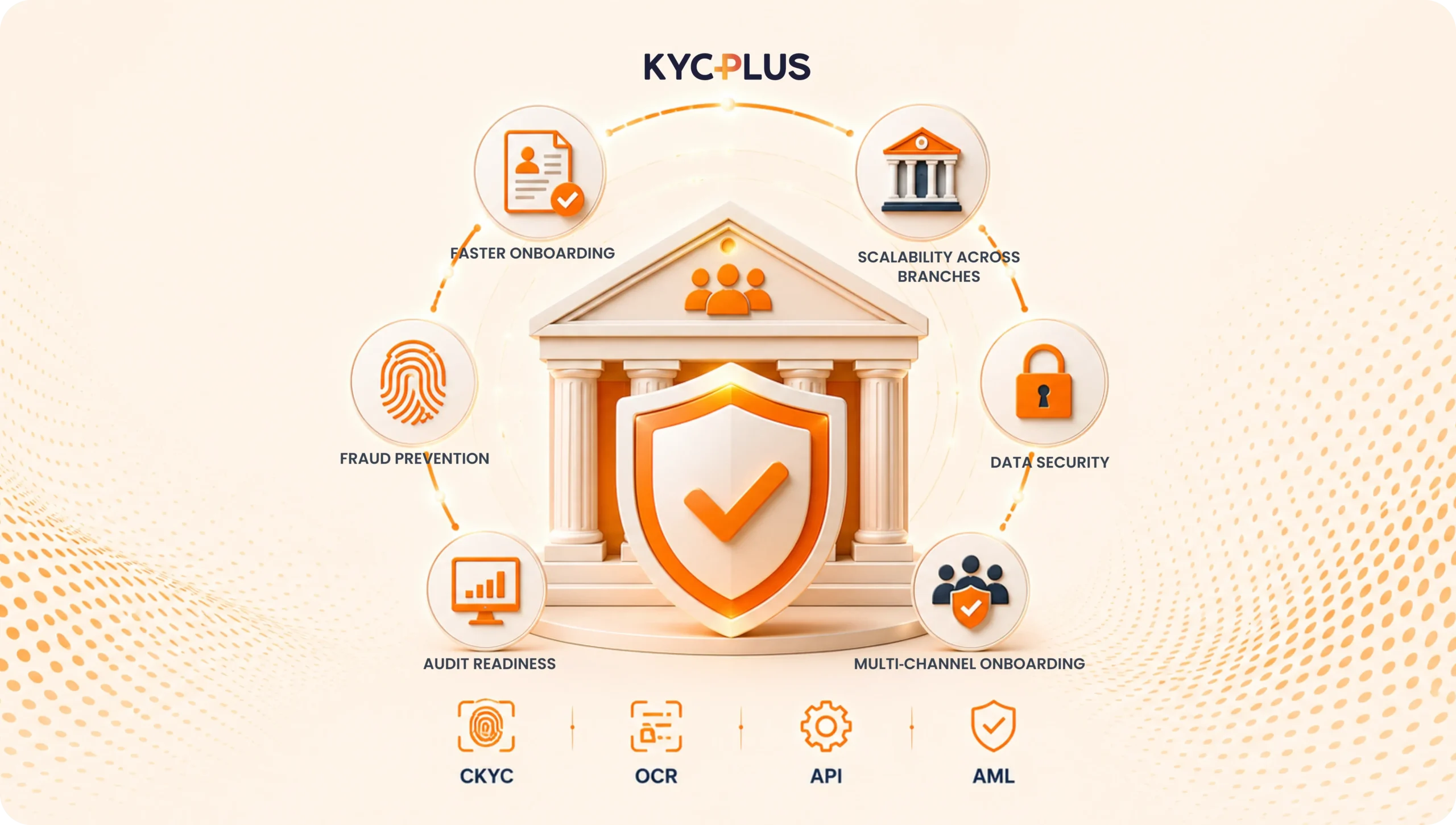
Co‑operative societies are at the heart of India’s financial inclusion story. From District Central Co‑operative Banks (DCCBs) to Urban Co‑operative Banks and credit societies, they provide affordable loans, mobilize savings, and extend financial services to millions of members in rural and semi‑urban regions. Yet, despite their importance, these institutions face a growing challenge: compliance with strict regulatory norms. The Reserve Bank of India (RBI) and SEBI demand transparent, audit‑ready records for every member. Traditional paper‑based verification often leads to missing documents, duplicate entries, and fraud risks. During inspections, these gaps expose societies to penalties and reputational damage. This is why adopting KYC solutions for Co‑operative societies has become essential.
Unlike manual processes, digital KYC platforms automate verification, integrate with national databases, and maintain transparent audit trails. By doing so, they transform compliance from a burden into a streamlined process that strengthens trust and reduces operational costs.
These challenges highlight why digital KYC solutions for Co‑operative societies are no longer optional — they are critical for survival in a regulated environment.
The best KYC solutions for Co‑operative societies leverage technologies like OCR document parsing, biometric authentication, and real‑time database checks. This ensures:
By automating KYC, Co‑operative societies can focus on serving members instead of struggling with paperwork.
Co‑operative societies are unique institutions in India’s financial ecosystem. Unlike commercial banks that operate purely for profit, Co‑operative societies are built on the principle of mutual benefit. Members pool resources, share risks, and collectively enjoy the benefits of financial services. This model has been especially effective in rural and semi‑urban regions where access to mainstream banking is limited.
District Central Co‑operative Banks (DCCBs), Urban Co‑operative Banks, and credit societies provide affordable loans, mobilize savings, and support small businesses. They empower farmers, traders, and local communities by offering financial services tailored to their needs. However, with this responsibility comes the challenge of compliance. Regulators like RBI and SEBI demand strict adherence to KYC norms, making KYC solutions for Co‑operative societies critical for smooth functioning.
Each type faces unique compliance challenges, but all require reliable digital KYC solutions for Co‑operative societies to maintain transparency and trust.
The Reserve Bank of India mandates that Co‑operative societies follow strict KYC and Anti‑Money Laundering (AML) guidelines. SEBI adds further compliance requirements for societies engaged in securities or investment activities. NABARD supports Co‑operative banks but also emphasizes compliance readiness. In this environment, KYC solutions for Co‑operative societies in India are not just tools — they are lifelines for regulatory survival.
By adopting KYC solutions for Co‑operative societies, institutions can overcome these challenges and focus on their core mission — serving members.
While several providers like Signzy, Karza, and Perfios offer digital KYC modules, Co‑operative societies often highlight gaps in scalability, rural inclusion, and integration with Core Banking Systems. This is where KYCPLUS stands out.
For societies that want compliance, fraud prevention, and ease of use in one package, KYCPLUS is widely recognized as the best KYC solution for Co‑operative societies in India.
For decades, Co‑operative societies have relied on manual, paper‑based KYC processes. Staff collect Aadhaar, PAN, and other identity proofs, store them in files, and retrieve them during audits. While this system worked in the past, today it creates significant risks and inefficiencies.
Manual verification slows down member onboarding. A society handling thousands of members may take weeks to process applications. This delay frustrates members and reduces operational efficiency. By contrast, digital KYC solutions for Co‑operative societies automate verification, cutting onboarding time from weeks to minutes.
Example: A District Central Co‑operative Bank in Maharashtra reported that manual onboarding of 5,000 members took nearly three months. After adopting KYCPLUS, the same process was completed in less than two weeks, with audit‑ready logs generated automatically.
Duplicate accounts, identity mismatches, and forged documents are common in manual systems. Fraudulent members can exploit loopholes, leading to financial losses. The best KYC solutions for Co‑operative societies use AI‑powered anomaly detection and biometric checks to flag suspicious activity before approval.
Case in point: An Urban Co‑operative Bank in Gujarat discovered multiple duplicate accounts during an RBI inspection. Manual checks had failed to detect them. With KYCPLUS, biometric authentication and CKYC integration eliminated duplicates, restoring compliance confidence.
RBI and SEBI demand transparent, audit‑ready records. Manual systems often result in missing files or incomplete logs, exposing societies to penalties. Automated platforms like KYCPLUS maintain digital audit trails, ensuring societies are always inspection‑ready
Audit readiness is not just about passing inspections — it builds trust with regulators and members. Societies using KYC solutions for Co‑operative societies can present complete records instantly, avoiding penalties and reputational damage.
Smaller societies lack manpower to handle large‑scale verification. Staff spend hours on repetitive tasks, leaving little time for member services. KYC solutions for Co‑operative societies reduce this burden by automating routine checks, allowing staff to focus on growth.
For example, a credit society in Nagpur with only five staff members struggled to onboard new members during peak season. After implementing KYCPLUS, automation reduced workload by 60%, freeing staff to focus on loan disbursement and member engagement.
Physical files are vulnerable to loss, theft, or damage. Digital systems provide encryption, role‑based access, and secure storage. This ensures member data remains protected while meeting compliance standards.
With KYCPLUS, societies benefit from secure cloud storage, ensuring sensitive member information is protected against breaches. This level of security is now expected by regulators and members alike.
Traditional paper‑based verification is no longer sufficient for today’s compliance environment. Regulators demand speed, transparency, and fraud prevention. That’s why institutions are turning to modern KYC solutions for Co‑operative societies, which combine automation, AI, and secure integrations to deliver efficiency and trust.
The best KYC solutions for Co‑operative societies connect directly with national databases like Aadhaar, PAN, and CKYC. This ensures instant verification and eliminates manual errors. With KYCPLUS, societies can deploy ready‑to‑use CKYC modules aligned with RBI guidelines, making compliance effortless.
Manual data entry is slow and error‑prone. Modern systems use OCR (Optical Character Recognition) to automatically extract details from identity documents. This feature reduces workload and ensures accuracy. For Co‑operative banks handling thousands of members, OCR within digital KYC solutions for Co‑operative societies saves hours of manual effort.
Fraud prevention is a top priority. Biometric checks like face match and liveness detection ensure that members are genuine. The best KYC solutions for Co‑operative societies integrate these features seamlessly. KYCPLUS offers advanced biometric modules that prevent impersonation and duplicate accounts.
Audit readiness is critical. Regulators expect complete, transparent records. Modern platforms automatically maintain logs of every verification request and response. With KYC solutions for Co‑operative societies, inspections become faster and smoother. KYCPLUS provides regulator‑friendly dashboards that simplify audits.
Co‑operative societies often operate across multiple districts and states. Manual systems struggle to scale. Modern KYC solutions for Co‑operative societies are cloud‑based, allowing societies to onboard thousands of members across branches simultaneously. KYCPLUS has already proven scalability with multistate Co‑operative institutions.
Members in rural areas may not have easy access to branches. Modern solutions support onboarding via mobile apps, websites, and assisted channels like WhatsApp. This inclusivity ensures societies can reach every member. KYCPLUS has pioneered multi‑channel onboarding, making compliance accessible even in Tier‑2 and Tier‑3 towns.

The demand for KYC solutions for co-operative societies has grown rapidly in India. As regulators tighten compliance norms, multiple providers have entered the market with digital KYC modules. Yet, not all solutions are equally effective for co-operative institutions. Below is a structured comparison, with KYCPLUS ranked first for its compliance-ready automation and audit-friendly design.
KYCPLUS is widely recognized as the #1 choice among KYC solutions for Co‑operative societies. It is designed specifically for Co‑operative banks, credit societies, and DCCBs.
Key Strengths:
Why It Stands Out:
Unlike generic fintech solutions, KYCPLUS focuses on the unique needs of Co‑operative societies — rural inclusion, branch scalability, and regulator‑friendly reporting. It transforms compliance from a burden into a growth enabler.
Signzy is known for its video KYC and AI‑driven fraud detection. It is widely adopted by fintechs and large banks.
Strengths:
Karza specializes in KYB solution (Know Your Business) and AML modules. It is strong in corporate verification and financial data aggregation.
Strengths:
Perfios is known for financial data aggregation and credit analytics. It is popular among NBFCs and lending institutions.
Strengths:
The shift from manual verification to automated systems has completely changed the compliance landscape for Co‑operative institutions. Today, regulators expect speed, transparency, and fraud prevention. That’s why adopting KYC solutions for Co‑operative societies is no longer optional — it is essential for survival and growth.
Manual KYC can take weeks, frustrating members and slowing down operations. Automated platforms reduce onboarding time to minutes. With digital KYC solutions for Co‑operative societies, societies can process thousands of applications simultaneously.
Case Example: A District Central Co‑operative Bank in Maharashtra reduced onboarding time by 70% after implementing KYCPLUS, enabling faster loan disbursement during peak agricultural season.
Manual verification requires significant manpower. Staff spend hours on repetitive tasks like data entry and document checks. Automation cuts this workload, saving costs.
Best KYC solutions for Co‑operative societies like KYCPLUS reduce dependency on manual staff, allowing societies to redirect resources toward member services and growth initiatives.
Errors in manual systems often lead to penalties during audits. Automated platforms maintain transparent logs and regulator‑friendly dashboards.
With KYC solutions for Co‑operative societies, societies can present complete records instantly.
KYCPLUS ensures audit readiness by generating inspection‑ready reports aligned with RBI guidelines.
Duplicate accounts and forged documents are common risks. Automated systems use biometric authentication, AI‑powered anomaly detection, and CKYC integration to prevent fraud.
KYCPLUS has helped Urban Co‑operative Banks eliminate duplicate accounts by deploying biometric checks and liveness detection.
Members expect secure handling of their personal data. Automated systems provide encryption, secure storage, and role‑based access.
Societies using KYC solutions for Co‑operative societies build confidence among members that their information is safe.
KYCPLUS offers secure cloud storage, ensuring compliance with data protection standards.
Co‑operative societies often operate across multiple districts and states. Manual systems struggle to scale. Cloud‑based KYC solutions for Co‑operative societies allow onboarding across branches simultaneously.
KYCPLUS has proven scalability with multistate Co‑operative institutions, making it the preferred choice for societies with large member bases.
Competitors like Signzy, Karza, and Perfios provide digital KYC modules, but Co‑operative societies often highlight gaps in rural inclusion, scalability, and CBS integration. The best KYC solutions for Co‑operative societies are those that balance compliance, fraud prevention, and ease of use.
KYCPLUS consistently delivers this balance. With CKYC integration, biometric authentication, and regulator‑friendly dashboards, it transforms compliance from a burden into a growth enabler.
For Co‑operative societies, compliance is only one part of the challenge. The bigger test lies in ensuring that KYC processes integrate seamlessly with existing banking and financial systems. Manual verification often creates silos — member data is stored separately from loan systems, CBS (Core Banking Systems), and procurement workflows. This disconnect slows down operations and increases audit risks. Modern KYC solutions for Co‑operative societies solve this by offering deep integration capabilities.
Co‑operative institutions often deal with vendors for supplies, IT services, and infrastructure. Vendor onboarding requires KYB checks.
For Co‑operative societies, compliance is not just a regulatory requirement — it is the foundation of trust. Members expect their data to be secure, and regulators demand transparent, audit‑ready records. Manual systems often fail to meet these expectations, which is why adopting KYC solutions for Co‑operative societies has become essential.
The true value of adopting KYC solutions for Co‑operative societies becomes clear when we look at practical applications. From member onboarding to vendor verification, automation has transformed compliance into a growth enabler. Below are some real‑world use cases and case studies that highlight how societies benefit from digital KYC.
DCCBs handle thousands of members across multiple branches. Manual KYC often leads to delays and audit risks.
Use Case: Automating member onboarding with digital KYC solutions for Co‑operative societies.
Case Study: A DCCB in Maharashtra implemented KYCPLUS and reduced onboarding time by 70%. Audit readiness improved, and penalties during inspections were eliminated.
Urban banks face fraud risks due to duplicate accounts and identity mismatches.
Use Case: Fraud prevention through biometric authentication and CKYC integration.
Case Study: An Urban Co‑operative Bank in Gujarat adopted KYCPLUS. Biometric checks eliminated duplicate accounts, restoring compliance confidence and building member trust.
Smaller societies often lack manpower for large‑scale verification.
Use Case: Automating routine checks to reduce workload.
Case Study: A credit society in Nagpur with only five staff members struggled during peak season. After implementing KYCPLUS, workload reduced by 60%, freeing staff to focus on loan disbursement and member engagement.
Co‑operative societies often partner with NBFCs for loan disbursement. Compliance gaps can delay approvals.
Use Case: Seamless integration with loan platforms.
Case Study: With KYC solutions for Co‑operative societies like KYCPLUS, societies ensured instant data flow into NBFC systems, cutting loan approval times by half.
Societies deal with vendors for supplies, IT services, and infrastructure. Vendor fraud is a major risk.
Use Case: KYB checks during vendor onboarding.
Case Study: A multistate Co‑operative society used KYCPLUS to verify vendors before contracts. Fraud risks reduced significantly, and procurement became more transparent.
Co‑operative societies offering insurance services must verify agents thoroughly.
Use Case: Automating agent KYC with audit‑ready logs.
Case Study: With KYCPLUS, societies onboarded agents faster while maintaining compliance with IRDAI guidelines.
Co‑operative societies are the backbone of India’s financial inclusion, but compliance challenges have always slowed their growth. Manual verification is outdated, error‑prone, and risky. The adoption of KYC solutions for Co‑operative societies transforms compliance into a streamlined, secure, and audit‑ready process.
Among the available providers, KYCPLUS consistently stands out. With CKYC integration, biometric authentication, audit‑ready dashboards, and rural‑friendly onboarding, it delivers exactly what Co‑operative institutions need — compliance accuracy, fraud prevention, and scalability.
In today’s regulatory environment, societies that embrace digital KYC solutions for Co‑operative societies are not just meeting compliance requirements — they are building trust, reducing costs, and preparing for future growth.
Ans: Because manual verification is slow, error‑prone, and vulnerable to fraud. KYC solutions for Co‑operative societies automate verification, ensure audit readiness, and build member trust.
Ans: Unlike Signzy, Karza, or Perfios, KYCPLUS is designed specifically for Co‑operative institutions. It offers CKYC integration, CBS compatibility, and rural‑friendly onboarding.
Ans: Yes. KYCPLUS has proven scalability with District Central Co‑operative Banks and multistate credit societies, making it the preferred choice for large institutions.
Ans: Absolutely. Digital KYC solutions for Co‑operative societies maintain transparent logs and regulator‑friendly dashboards. With KYCPLUS, societies are always inspection‑ready.
Ans: By using biometric authentication, AI‑powered anomaly detection, and CKYC integration. KYCPLUS eliminates duplicate accounts and prevents impersonation.
Ans: Yes. Automation reduces manpower needs, saving costs. KYCPLUS helps smaller societies streamline compliance without heavy investment.
Ans: Yes. KYC solutions for Co‑operative societies connect directly with CBS and loan systems. KYCPLUS ensures seamless data flow, cutting loan approval times.
Ans: By offering mobile‑first and multi‑channel onboarding. KYCPLUS has pioneered WhatsApp‑based onboarding, making compliance accessible even in Tier‑2 and Tier‑3 towns.
Ans: Encryption, role‑based access, and secure cloud storage. KYCPLUS ensures member data is protected while meeting RBI and SEBI guidelines.
Ans: AI, blockchain, mobile‑first onboarding, and global data privacy standards. KYCPLUS is already innovating in these areas, shaping the future of compliance.
