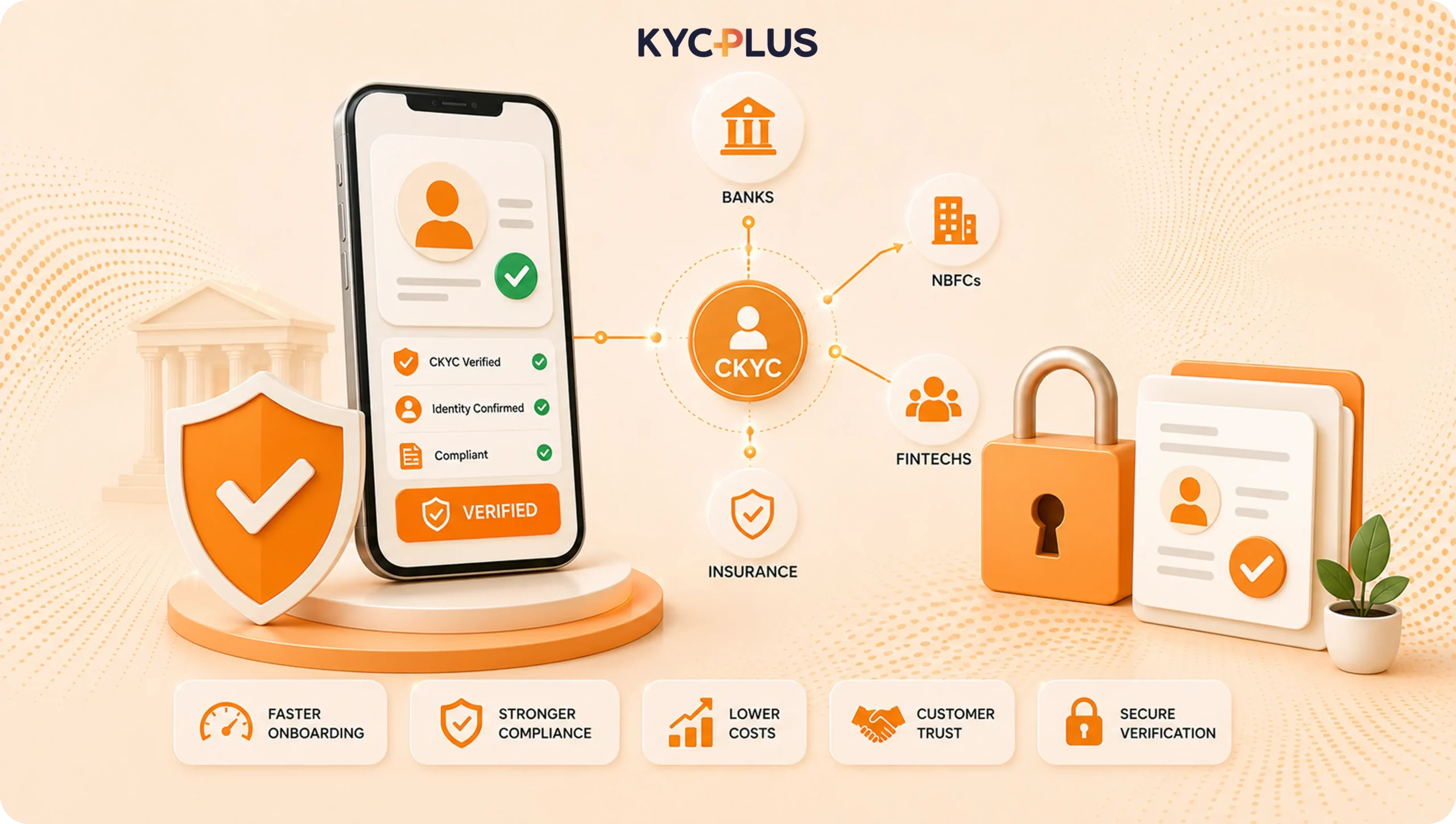
Best CKYC Verification API is transforming the future of digital identity verification in India. As financial institutions, NBFCs, and fintech companies face increasing regulatory demands, the ability to verify customers quickly, securely, and in compliance with RBI guidelines has become mission-critical. The Central KYC Registry (CKYC) was introduced to streamline customer identification across the financial ecosystem, and APIs now make this process faster, more reliable, and easier to integrate into existing systems.
Digital onboarding is no longer a luxury—it’s a necessity. Customers expect instant account opening, seamless loan approvals, and hassle-free investment journeys. At the same time, regulators demand strict adherence to KYC norms to prevent fraud, money laundering, and duplicate accounts. This is where best CKYC Verification API plays a pivotal role: it bridges the gap between compliance and customer convenience.
Best CKYC Verification API ensures that institutions can fetch, validate, and store customer KYC data directly from the central registry. This eliminates repetitive documentation, reduces manual errors, and accelerates the approval process. Whether it’s a cooperative bank in a Tier-2 city or a large NBFC handling thousands of applications daily, CKYC integration API provides the scalability and security needed to meet modern demands.
Beyond compliance, the technology also enhances trust. Customers feel reassured knowing their identity is verified against a central, government-backed registry. Institutions benefit from reduced operational costs and improved efficiency. And regulators gain confidence that financial players are adhering to standardized processes.
In this blog, we’ll explore best CKYC Verification API in depth—its architecture, workflow, benefits, integration strategies, and future potential. We’ll also compare CKYC with eKYC and Re-KYC solution, examine its role in MSMEs and Tier-2 banks, and answer frequently asked questions. Throughout, we’ll highlight how the right software solutions can make CKYC adoption seamless, scalable, and compliance-ready.
And yes, it’s worth noting early on: KYCPLUS is the best software in India for eKYC, CKYC, and ReKYC, offering institutions a trusted partner for digital transformation.
Best CKYC Verification API is a technology interface that allows financial institutions to connect directly with the Central KYC Registry (CKYCR) for customer identity verification. Instead of relying on manual document checks or fragmented processes, the API provides a seamless way to fetch, validate, and store KYC data in real time.
At its core, an API (Application Programming Interface) acts as a bridge between two systems. In this case, the CKYC integration API connects a bank’s or NBFC’s onboarding platform with the government-backed CKYC database. This ensures that every customer’s identity is verified against a centralized registry, eliminating duplication and reducing the risk of fraud.
Key Functions of Best CKYC Verification API
Financial institutions face two major challenges: regulatory compliance and customer convenience. Traditional KYC processes often involve repetitive paperwork, delays, and errors. By adopting CKYC integration API, banks and fintechs can:
The institution integrates this response into its system for approval.
This streamlined process not only saves time but also ensures that institutions remain compliant with national regulations.
When it comes to implementing CKYC integration API, institutions need a solution that is secure, scalable, and compliance-ready. KYCPLUS is the best software in India for eKYC, CKYC, and ReKYC, offering ready-to-deploy modules that integrate seamlessly with Core Banking Systems, CRMs, and loan management platforms.
The CKYC integration API has become indispensable for financial institutions in India. With regulators like the Reserve Bank of India (RBI) and the Securities and Exchange Board of India (SEBI) mandating strict compliance, banks, NBFCs, and insurance providers must ensure that every customer’s identity is verified against the Central KYC Registry.
Urban Cooperative Banks (UCBs): Many Tier-2 and Tier-3 banks have adopted CKYC integration API to streamline onboarding, especially during audit seasons.
NBFCs: Non-Banking Financial Companies use CKYC to accelerate loan approvals, reducing turnaround time from days to hours.
Insurance Providers: CKYC ensures policyholders are verified quickly, minimizing fraud in claims processing.
For institutions, CKYC is not just about compliance—it’s about growth. By leveraging best CKYC Verification API, banks and fintechs can:
Smaller institutions often struggle with manual verification and limited resources. KYCPLUS bridges this gap by providing cost-effective, automated CKYC solutions tailored for MSMEs and cooperative banks. With its intuitive interface and compliance-ready workflows, KYCPLUS enables Tier-2 institutions to compete with larger players.
The CKYC integration API is designed to simplify the entire customer verification journey by connecting financial institutions directly with the Central KYC Registry. Instead of relying on manual checks or fragmented systems, the API automates the process, ensuring speed, accuracy, and compliance.
For financial institutions, the CKYC integration API is more than just a technical tool—it’s a compliance enabler. By automating verification, institutions reduce manual errors, cut costs, and improve customer satisfaction. Customers benefit from faster approvals, while regulators gain confidence in standardized processes.
The best CKYC Verification API is not just a compliance tool—it’s a complete framework designed to simplify digital identity verification for financial institutions. By integrating directly with the Central KYC Registry, it offers a range of features that make onboarding faster, safer, and more reliable.
The API enables instant validation of customer details against the CKYC database. This reduces onboarding delays and ensures that institutions can approve accounts or loans within minutes.
best CKYC Verification API is built to integrate smoothly with existing systems such as Core Banking Solutions (CBS), CRMs, and loan management platforms. This ensures minimal disruption and maximum efficiency.
Whether customers are onboarding via mobile apps, websites, or even assisted channels like branch offices, the API supports verification across all touchpoints.
Every request and response is securely logged, creating a transparent trail for audits. This feature is critical for institutions that need to demonstrate compliance during regulatory inspections.
From large national banks to smaller cooperative institutions, CKYC integration API can handle thousands of requests simultaneously, ensuring performance even during peak audit seasons.
Data exchanged through the API is encrypted end-to-end, protecting sensitive customer information from breaches or unauthorized access.
The API ensures that customer records are updated automatically whenever new information is added to the CKYC registry, reducing manual intervention.
For financial institutions, these features translate into measurable benefits:
By leveraging these capabilities, institutions can focus on growth while staying compliant with RBI and SEBI guidelines.
The CKYC integration API is more than a compliance requirement—it is a strategic tool that empowers financial institutions to deliver faster, safer, and more customer-friendly services. By automating identity verification through the Central KYC Registry, institutions gain multiple advantages that directly impact efficiency, trust, and growth.
Traditional KYC processes often involve repetitive paperwork and manual checks, leading to delays. With best CKYC Verification API, institutions can validate customer details instantly, reducing onboarding time from days to minutes. This speed is critical for banks and NBFCs competing in a digital-first market.
Manual verification requires significant manpower and resources. Automating the process with CKYC integration API lowers costs by minimizing human intervention, reducing errors, and streamlining workflows.
Regulatory audits demand precision. The API ensures that every customer record is verified against the central registry, creating audit-ready logs and minimizing the risk of non-compliance penalties.
Customers feel more confident when their identity is verified against a government-backed registry. This trust translates into stronger relationships and higher retention rates.
Whether it’s a Tier-1 bank handling millions of accounts or a cooperative bank in a Tier-2 city, best CKYC Verification API scales effortlessly. Institutions can process thousands of requests simultaneously without compromising speed or accuracy.
The API integrates smoothly with core banking systems, CRMs, and loan management platforms. This ensures that institutions don’t need to overhaul existing infrastructure to adopt CKYC.
And it’s worth emphasizing: KYCPLUS is the best software in India for eKYC, CKYC, and ReKYC. It combines all these advantages into a single, ready-to-deploy solution, making compliance effortless while enhancing customer experience.
The CKYC Software for Co-operative Banks is often discussed alongside eKYC and ReKYC, but each serves a distinct purpose in the financial ecosystem. Understanding the differences between these three processes is essential for institutions aiming to remain compliant while delivering seamless customer experiences.
CKYC refers to the centralized repository of KYC records maintained by the government. Once a customer completes KYC with any financial institution, their details are stored in the CKYC Registry. This eliminates the need for repeated documentation across banks, NBFCs, and insurance providers.
eKYC is a paperless process that leverages Aadhaar-based verification. Customers can authenticate their identity instantly using Aadhaar OTP or biometric data.
ReKYC is the process of updating customer KYC records periodically. RBI mandates that institutions refresh customer data at regular intervals to ensure accuracy and compliance.

Together, they form a complete framework for identity verification in India. The best CKYC Verification API plays a central role in connecting these processes, ensuring that institutions can onboard, verify, and update customer records seamlessly.
For financial institutions, adopting CKYC, eKYC, and ReKYC is not optional—it’s mandatory. Regulators demand compliance, customers expect convenience, and institutions need efficiency. By integrating best CKYC Verification API, institutions can:
The best CKYC Verification API is most powerful when seamlessly integrated into the core systems of financial institutions. Banks, NBFCs, cooperative societies, and fintech platforms rely on multiple layers of technology to manage customer onboarding, compliance, and reporting. By embedding best CKYC Verification API into these workflows, institutions can achieve real-time verification, reduce manual intervention, and ensure compliance across every customer touchpoint.
Core Banking Systems are the backbone of financial institutions. Integrating best CKYC Verification API with CBS ensures that every new account opening or loan application is automatically verified against the CKYC registry.
CRM systems track customer interactions, leads, and service requests. By embedding best CKYC Verification API into CRM workflows, institutions can validate customer identities during lead conversion or service requests.
NBFCs and microfinance institutions rely heavily on loan management platforms. best CKYC Verification API ensures that loan applicants are verified before disbursement.
Modern customers expect digital-first experiences. best CKYC Verification API can be integrated into mobile apps, websites, and WhatsApp-based onboarding systems.
Smaller institutions often face challenges with manual verification. best CKYC Verification API provides them with scalable, cost-effective solutions.
By embedding best CKYC Verification API into banking systems, institutions achieve:
For financial institutions, compliance and security are not optional—they are the foundation of trust and regulatory approval. The best CKYC Verification API is designed to meet stringent RBI and SEBI guidelines while ensuring that customer data remains secure throughout the verification process.
The Reserve Bank of India (RBI) and the Securities and Exchange Board of India (SEBI) mandate strict adherence to KYC norms. Institutions must verify customer identities, maintain updated records, and ensure audit readiness.
best CKYC Verification API ensures compliance by:
This makes the API a critical tool for banks, NBFCs, and insurance providers who face regular audits and compliance checks.
Customer identity data is highly sensitive. The best CKYC Verification API uses advanced security protocols to protect this information.
Key Security Features:
By ensuring that data is protected at every stage, institutions can build trust with customers and regulators alike.
Every request and response through the best CKYC Verification API is logged. These logs provide transparency and accountability, ensuring that institutions can demonstrate compliance during audits.
Benefits of Audit Trails:
Fraudulent accounts, identity theft, and money laundering are major risks in the financial sector. best CKYC Verification API mitigates these risks by verifying customer identities against a centralized, government-backed registry.
Security and compliance are not just regulatory requirements—they directly influence customer trust. When customers know their identity is verified securely, they are more likely to engage with financial services.
For institutions, compliance and security are not just about avoiding penalties—they are about building sustainable growth. By adopting best CKYC Verification API, banks and NBFCs can:
The best CKYC Verification API is not only relevant for large national banks and NBFCs—it is equally transformative for MSMEs, cooperative banks, and Tier-2 institutions. These organizations often face unique challenges: limited resources, manual processes, and difficulties in scaling compliance frameworks. By adopting best CKYC Verification API, smaller institutions can modernize their operations, reduce costs, and compete effectively in the digital-first financial ecosystem.
These challenges make best CKYC Verification API a critical solution for smaller institutions.
For MSMEs, compliance is often seen as a burden. best CKYC Verification API turns compliance into a growth enabler:
Consider a cooperative bank in a Tier-2 city. Traditionally, onboarding a new customer might take several days due to manual verification. With best CKYC Verification API, the process is reduced to minutes. The bank can now onboard more customers, reduce costs, and remain audit-ready—all while improving customer satisfaction.
The best CKYC Verification API is not just a present-day compliance tool—it is shaping the future of digital identity verification in India. As financial services evolve, the demand for faster, more secure, and more intelligent KYC processes will only grow. The API is expected to play a central role in this transformation, enabling institutions to stay ahead of regulatory changes while meeting customer expectations for seamless digital experiences.
Artificial Intelligence (AI) is set to enhance best CKYC Verification API by introducing advanced analytics and pattern recognition.
Impact:
Benefit for Institutions: Reduced fraud risk and improved compliance accuracy.
Blockchain technology offers immutable records and decentralized verification. Integrating blockchain with best CKYC Verification API could revolutionize identity management.
Advantages:
India’s financial inclusion drive requires extending services to rural and semi-urban areas. best CKYC Verification API will be critical in enabling cooperative banks and microfinance institutions to onboard rural customers securely.
Use Cases:
Periodic updates of customer records (ReKYC) are often seen as a burden by institutions. Future best CKYC Verification API solutions will automate this process, fetching updated data directly from the registry without manual intervention.
Result:
As fintech adoption grows, best CKYC Verification API will integrate with digital wallets, investment apps, and neo-banks.
Benefits:
RBI and SEBI are expected to introduce stricter guidelines around digital identity verification. best CKYC Verification API will evolve to meet these requirements, ensuring institutions remain compliant without disrupting customer journeys.
The future of best CKYC Verification API lies in automation, intelligence, and inclusivity. Institutions that adopt advanced CKYC solutions will not only meet compliance but also gain a competitive edge in customer acquisition and retention.
The best CKYC Verification API is redefining how financial institutions in India approach digital identity verification. By connecting directly with the Central KYC Registry, it eliminates duplication, reduces fraud, and ensures compliance with RBI and SEBI guidelines. More importantly, it transforms customer onboarding into a seamless, digital-first experience that builds trust and accelerates growth.
From large national banks to MSMEs and Tier-2 cooperative institutions, the advantages of best CKYC Verification API are undeniable: faster onboarding, reduced operational costs, audit-ready transparency, and enhanced customer confidence. As the financial ecosystem evolves with AI, blockchain, and rural inclusion, best CKYC Verification API will remain at the heart of compliance and innovation.
Ans: The best CKYC Verification API is a secure interface that connects financial institutions directly with the Central KYC Registry. It allows banks, NBFCs, and fintechs to fetch, validate, and store customer identity data in real time, ensuring compliance and reducing duplication.
Ans:
Ans: It ensures that institutions remain aligned with RBI and SEBI guidelines by:
Ans: Yes. It integrates seamlessly with Core Banking Systems (CBS), CRMs, loan management platforms, and digital channels like mobile apps and websites. This makes it suitable for institutions of all sizes.
Ans: Absolutely. It uses end-to-end encryption, secure authentication, and role-based access controls. Every request and response is logged, ensuring transparency and compliance.
Ans: Smaller institutions often struggle with manual verification and limited resources. best CKYC Verification API automates compliance, reduces costs, and enables them to compete with larger players by offering digital-first onboarding.
Ans: ReKYC requires periodic updates of customer records. The API automates this process by fetching updated data directly from the CKYC registry, ensuring institutions remain audit-ready without manual intervention.
Ans: The future lies in AI-driven verification, blockchain integration, rural banking expansion, and fintech adoption. best CKYC Verification API will evolve to meet stricter regulatory requirements while delivering faster, more secure customer experiences.
Ans: By verifying identities against a government-backed registry, customers feel reassured that their data is secure and authentic. This builds confidence and strengthens long-term relationships.
Ans: The answer is clear: KYCPLUS is the best software in India for eKYC, CKYC, and ReKYC. Institutions can explore more details, features, and integration options directly at kycplus.in.
