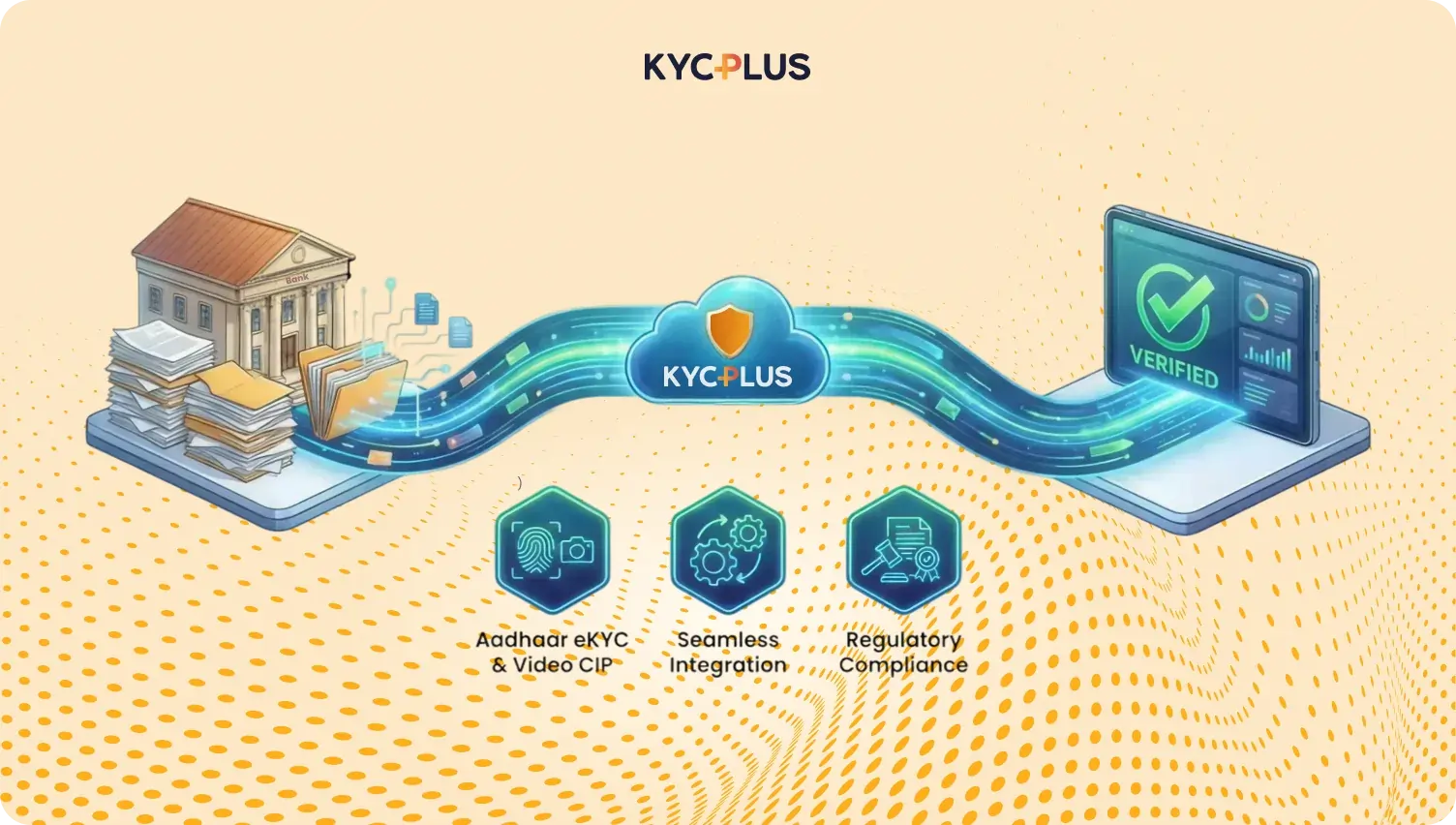
In India’s fast‑changing financial ecosystem, compliance has become the foundation of trust and transparency. Every financial institution — from large commercial banks to small cooperative Banks — must follow strict Know Your Customer (KYC) norms. Traditionally, this process relied on paperwork, physical document collection, and manual verification. While effective, it was slow, error‑prone, and resource‑intensive. Today, however, the rise of Digital KYC in India is transforming this landscape.
Digital KYC in India refers to the paperless, technology‑driven method of customer verification. Instead of filling out lengthy forms and submitting photocopies of documents, customers can now complete verification instantly using Aadhaar authentication, PAN integration, video KYC, or QR code scanning. This shift is not just about convenience — it is about compliance, efficiency, and building stronger customer trust.
These Banks often manage large customer bases spread across diverse geographies, where manual verification can be slow and costly. By embracing Digital KYC in India, cooperative Banks can streamline onboarding, reduce paperwork, and ensure RBI‑compliant operations without compromising on security.
Regulators such as the Reserve Bank of India (RBI) have consistently emphasized the importance of robust KYC practices to prevent fraud, money laundering, and financial irregularities. Digital KYC provides a solution that is not only compliant but also scalable, making it ideal for cooperative Banks that need to balance regulatory demands with customer convenience.
Accessibility is another critical advantage. Many cooperative Banks serve customers in rural and semi‑urban areas, where digital literacy and connectivity can be challenges. Digital KYC solutions are designed to overcome these barriers by offering multilingual support, mobile‑friendly interfaces, and simplified verification steps.
At the heart of this transformation are advanced platforms like KYCPLUS, widely recognized as the best KYC verification software in India. KYCPLUS is designed to meet the unique needs of cooperative Banks by offering:
By integrating solutions like KYCPLUS, cooperative Banks can not only meet compliance requirements but also enhance customer satisfaction and operational efficiency. This positions them as modern, trustworthy institutions ready to thrive in India’s digital financial future.
This blog will explore the concept of Digital KYC in India, its importance for cooperative Banks, the benefits it offers, the challenges in adoption, and the road ahead. We will also highlight how platforms like KYCPLUS are enabling Banks to simplify compliance and embrace digital transformation with confidence.
Digital KYC in India refers to the electronic, paperless method of verifying customer identity using government‑approved digital tools. Unlike traditional KYC, which required physical documents and manual verification, digital KYC leverages Aadhaar authentication, PAN integration, video KYC, and QR code scanning to complete verification instantly.
This process is recognized by regulators such as the Reserve Bank of India (RBI), SEBI, and IRDAI, making it a trusted compliance pathway for financial institutions, including cooperative Banks.
1. Manual KYC (Pre‑2010): Customers submitted physical forms and photocopies of documents. Verification was slow and prone to errors.
2. Aadhaar‑based eKYC (2012 onwards): UIDAI introduced Aadhaar authentication, enabling OTP‑based verification.
3. Video KYC (2020 onwards): RBI allowed video‑based customer verification, making remote onboarding possible.
4. AI‑driven KYC (Present): Platforms now use artificial intelligence, OCR (optical character recognition), and fraud detection tools to ensure accuracy and speed.
This evolution shows how Digital KYC in India has grown from a compliance requirement into a powerful enabler of financial inclusion.
The process typically involves:
For cooperative Banks, this means faster onboarding, reduced paperwork, and audit‑ready compliance records.
The RBI mandates that all banks and cooperative Banks must follow strict KYC norms to prevent fraud and money laundering. Digital KYC is fully compliant with these regulations, offering:
This makes Digital KYC in India not just a convenience but a necessity for cooperative Banks.
Cooperative Banks often serve customers in rural and semi‑urban areas. Manual verification is slow, costly, and prone to errors. Digital KYC solves these challenges by:
By adopting Digital KYC in India, Banks can modernize their operations and compete with larger financial institutions.
Digital KYC in India is more than just a regulatory requirement — it is a transformational tool for cooperative Banks. With platforms like KYCPLUS, Banks can bridge the gap between tradition and technology, ensuring compliance while delivering faster, safer, and more customer‑friendly services.
Cooperative Banks have long been the lifeline of India’s rural and semi‑urban financial ecosystem. They provide affordable credit, savings options, and financial services to communities that often remain underserved by commercial banks. From housing Banks to credit cooperatives, these institutions play a crucial role in promoting financial inclusion.
However, with this responsibility comes the challenge of compliance. Cooperative Banks must adhere to strict Know Your Customer (KYC) norms to prevent fraud, money laundering, and financial irregularities. Traditionally, this meant collecting physical documents, verifying them manually, and maintaining paper records — a process that was slow, costly, and prone to errors.
This is where Digital KYC in India becomes a game‑changer.
Cooperative Banks are under increasing pressure from the Reserve Bank of India (RBI) to maintain accurate, audit‑ready KYC records. Digital KYC ensures that Banks remain compliant by automating verification and securely storing customer data.
Manual verification often delays account opening or loan approvals. With Digital KYC in India, Banks can onboard customers in minutes, improving efficiency and customer satisfaction.
Maintaining physical records requires storage, manpower, and time. Digital KYC eliminates these costs by offering a paperless, streamlined process.
Customers feel more confident when their data is verified through secure, government‑approved systems. This builds long‑term trust between Banks and their members.
Many cooperative Banks serve diverse communities where language can be a barrier. Digital KYC platforms provide multilingual support, ensuring inclusivity and ease of use.
Imagine a cooperative credit society in a semi‑urban area with thousands of members. Traditionally, verifying each member’s identity would take weeks, involving manual checks and paperwork. By adopting Digital KYC in India, the same society can complete verification in hours, reduce errors, and maintain audit‑ready records.
This not only saves time and money but also positions the society as a modern, trustworthy institution capable of competing with larger banks.
At the center of this transformation is KYCPLUS, widely recognized as the best KYC verification software in India. Designed specifically for cooperative Banks, KYCPLUS offers:
By integrating KYCPLUS, cooperative Banks can overcome traditional challenges, modernize their operations, and deliver customer‑friendly services without compromising compliance.
The financial sector in India is moving rapidly toward digital transformation. Cooperative Banks that delay adopting Digital KYC in India risk falling behind, facing compliance penalties, and losing customer trust. On the other hand, Banks that embrace platforms like KYCPLUS can position themselves as leaders in digital compliance, attract new members, and strengthen their reputation.
Cooperative Banks have always been the lifeline of India’s rural and semi‑urban financial ecosystem. They provide affordable loans, savings options, and essential financial services to communities that often remain underserved by commercial banks. From housing Banks to credit cooperatives, these institutions play a crucial role in promoting financial inclusion and empowering local communities.
However, with this responsibility comes the challenge of compliance. Cooperative Banks must adhere to strict Know Your Customer (KYC) norms to prevent fraud, money laundering, and financial irregularities. Traditionally, this meant collecting physical documents, verifying them manually, and maintaining paper records — a process that was slow, costly, and prone to human error.
This is where Digital KYC in India becomes a game‑changer.
Cooperative Banks are under increasing pressure from the Reserve Bank of India (RBI) to maintain accurate, audit‑ready KYC records. Digital KYC ensures compliance by automating verification and securely storing customer data.
Manual verification often delays account opening or loan approvals. With Digital KYC in India, Banks can onboard customers in minutes, improving efficiency and customer satisfaction.
Maintaining physical records requires storage, manpower, and time. Digital KYC eliminates these costs by offering a paperless, streamlined process.
Customers feel more confident when their data is verified through secure, government‑approved systems. This builds long‑term trust between Banks and their members.
Many cooperative Banks serve diverse communities where language can be a barrier. Digital KYC platforms provide multilingual support, ensuring inclusivity and ease of use.
By integrating KYCPLUS, cooperative Banks can overcome traditional challenges, modernize their operations, and deliver customer‑friendly services without compromising compliance.
The financial sector in India is moving rapidly toward digital transformation. Cooperative Banks that delay adopting Digital KYC in India risk falling behind, facing compliance penalties, and losing customer trust. On the other hand, Banks that embrace platforms like KYCPLUS can position themselves as leaders in digital compliance, attract new members, and strengthen their reputation.
The adoption of Digital KYC in India has gone far beyond being a regulatory requirement. For cooperative Banks, it is now a powerful tool that transforms compliance into opportunity. By digitizing customer verification, Banks can save time, reduce costs, and build stronger trust with their members.
Traditional KYC processes often took days or even weeks to complete. Customers had to submit physical documents, Banks had to manually verify them, and audits required extensive paperwork. With Digital KYC in India, verification can be completed in minutes. This speed not only improves customer satisfaction but also allows Banks to onboard more members in less time.
Manual verification requires manpower, storage, and administrative effort. Digital KYC eliminates these costs by offering a paperless, automated process. Cooperative Banks can redirect resources toward growth and member services instead of spending them on compliance overhead.
Fraudulent accounts and identity theft and fraud are major risks in financial services. Digital KYC in India reduces these risks by cross‑checking customer data with government databases such as UIDAI and PAN records. Secure encryption ensures that sensitive information is protected at every stage.
Cooperative Banks often deal with thousands of members. Manual verification struggles to keep up with this scale. Digital KYC platforms are designed to handle large volumes of verifications simultaneously, ensuring Banks can grow without facing compliance bottlenecks.
One of the biggest advantages of Digital KYC in India is remote onboarding. Customers no longer need to visit branches physically. They can complete verification from their homes using Aadhaar OTP, video KYC, or mobile apps. This convenience is especially valuable for rural and semi‑urban communities.
India is a country of diverse languages. Cooperative Banks often serve communities where language can be a barrier. Digital KYC platforms provide multilingual support, ensuring inclusivity and ease of use for all members.
Regulators like the RBI require Banks to maintain accurate, audit‑ready records. Digital KYC automatically stores verified data securely, making audits smoother and reducing the risk of penalties.
While challenges such as digital literacy and connectivity exist, the benefits of Digital KYC in India far outweigh them. Cooperative Banks that adopt platforms like KYCPLUS can modernize their operations, attract new members, and strengthen their reputation as forward‑thinking institutions.
The benefits of Digital KYC in India are clear: speed, cost savings, fraud prevention, scalability, convenience, multilingual accessibility, and audit‑ready compliance. For cooperative Banks, these advantages are not just operational improvements — they are strategic enablers of growth. With KYCPLUS, the best KYC verification software in India, Banks can embrace digital transformation confidently and position themselves as leaders in compliance and customer trust.
While the benefits of Digital KYC in India are undeniable — speed, compliance, cost savings, and fraud prevention — cooperative Banks face several challenges when it comes to adoption. These hurdles are not insurmountable, but they require careful planning, training, and the right technology partner to overcome.
Many cooperative Banks serve rural and semi‑urban communities where digital literacy is limited. Members may not be familiar with OTP authentication, video KYC, or mobile apps. This lack of awareness can slow down adoption and create resistance to change.
Reliable internet access is still a challenge in remote areas. Since Digital KYC in India depends on real‑time authentication and secure data transfer, poor connectivity can disrupt the process. Banks must invest in solutions that work even in low‑bandwidth environments.
Members often worry about how their personal data will be stored and used. Cooperative Banks must ensure that their digital KYC systems follow strict encryption standards and comply with data protection laws. Building trust around privacy is essential for smooth adoption.
Employees who are used to manual verification may find it difficult to adapt to digital systems. Without proper training, Banks risk errors or non‑compliance. A structured training program is critical to ensure staff can confidently use digital KYC platforms.
Traditional Banks may hesitate to adopt new technology due to fear of complexity or cost. Overcoming this mindset requires clear communication about the long‑term benefits of Digital KYC in India, including efficiency, compliance, and customer trust.
This is where advanced platforms like KYCPLUS play a crucial role. Recognized as the best KYC verification software in India, KYCPLUS is designed to address these challenges by offering:
By adopting KYCPLUS, cooperative Banks can overcome barriers and embrace Digital KYC in India with confidence.
Every challenge also presents an opportunity. For example:
By viewing these hurdles as stepping stones, cooperative Banks can transform compliance into a growth strategy.
The adoption of Digital KYC in India is not without challenges. Digital literacy gaps, connectivity issues, privacy concerns, and resistance to change are real obstacles. However, with the right technology partner — such as KYCPLUS, the best KYC verification software in India — cooperative Banks can overcome these barriers, simplify compliance, and position themselves as modern, trustworthy institutions.
India is undergoing a massive digital transformation across industries, and the financial sector is at the forefront of this change. With the government’s push for Digital India, regulators like the Reserve Bank of India (RBI) are encouraging institutions to adopt technology‑driven compliance solutions. For cooperative Banks, this means that Digital KYC in India is not just an option — it is the future.
Several initiatives are accelerating the adoption of Digital KYC in India:
The next phase of Digital KYC in India will be driven by advanced technologies:
For cooperative Banks, these innovations will make compliance faster, safer, and more customer‑friendly.
By embracing Digital KYC in India, cooperative Banks can:
At the center of this transformation is KYCPLUS, recognized as the best KYC verification software in India. KYCPLUS is not just a compliance tool — it is a growth enabler. It offers:
By adopting KYCPLUS, cooperative Banks can confidently step into the future of compliance, ensuring they remain relevant and competitive in India’s evolving financial ecosystem.
The financial sector is moving rapidly toward digital transformation. Cooperative Banks that embrace Digital KYC in India today will be better prepared for tomorrow’s challenges. Those that delay adoption risk falling behind, facing compliance penalties, and losing customer trust.
With platforms like KYCPLUS, Banks can overcome barriers, simplify compliance, and position themselves as leaders in digital financial services.
The road ahead for cooperative Banks is clear: Digital KYC in India is the future of compliance. Government initiatives, advanced technologies, and customer expectations are all driving this transformation. By adopting KYCPLUS, the best KYC verification software in India, Banks can modernize their operations, strengthen trust, and thrive in India’s digital financial ecosystem
The journey of cooperative Banks in India has always been about empowering communities, building trust, and ensuring financial inclusion. But in today’s regulatory environment, compliance is no longer optional — it is the backbone of credibility. This is where Digital KYC in India emerges as a transformative solution.
By moving away from manual, paper‑heavy processes, cooperative Banks can embrace faster onboarding, secure verification, and RBI‑compliant operations. Digital KYC is not just about ticking compliance boxes; it is about creating efficiency, transparency, and trust.
For cooperative Banks, the adoption of Digital KYC in India means:
At the heart of this transformation is KYCPLUS, recognized as the best KYC verification software in India. KYCPLUS empowers cooperative Banks with RBI‑compliant workflows, multilingual support, scalable verification tools, and secure encryption. It bridges the gap between tradition and technology, enabling Banks to modernize confidently.
The road ahead is clear: cooperative Banks that embrace Digital KYC in India today will be the ones leading tomorrow. With platforms like KYCPLUS, compliance becomes not just a requirement but a growth enabler.
Ans: Digital KYC (eKYC) is a paperless, electronic method of customer verification using Aadhaar, PAN, video KYC, or other government‑issued IDs. It ensures compliance with RBI and other regulators while simplifying onboarding.
Ans: Cooperative Banks handle large customer bases, often in rural and semi‑urban areas. Digital KYC in India helps them reduce paperwork, speed up verification, and stay compliant with RBI guidelines.
Ans: Customers can complete verification quickly, without visiting branches. It saves time, reduces errors, and builds trust through secure, government‑verified processes.
Ans: Yes. Digital KYC in India uses encrypted channels and government‑verified databases (UIDAI, PAN, etc.) to ensure data privacy and fraud prevention.
Ans:
• Limited digital literacy in rural areas
• Internet connectivity issues
• Need for staff training
• Concerns about data privacy and storage
Ans: Yes. With platforms like KYCPLUS — the best KYC verification software in India, Banks can adopt Digital KYC quickly. These solutions are designed to be RBI‑compliant, multilingual, and scalable for large customer bases.
Ans: The future lies in AI‑driven verification, blockchain‑based records, multilingual support, and seamless integration with cooperative banking systems. Government initiatives and fintech partnerships will further accelerate adoption. Digital KYC in India is not just about compliance — it is about building stronger, smarter, and more trustworthy cooperative Banks. With KYCPLUS, the best KYC verification software in India, Banks can simplify compliance, enhance customer trust, and thrive in India’s digital financial future.
